III · Glossary

Terms
& places.

A reference for every proper noun Nina names — plus the foreign terms, organizations, and historical events that shaped her life. Compiled from the testimony recorded October 29, 1998, in Tel Aviv.

91 entries · People · Places · Organizations · Events · Foreign Terms

Jump to → People Places Organizations Events Foreign Terms Note on Language
I · People

People she named.

Family, neighbors, fellow prisoners, perpetrators, interviewer — and the poets and playwrights who turn up along the way. Alphabetical by surname (or by given name, where no surname is known).

Biebow, Hans 1902 – 1947
The German head of the Łódź Ghetto Administration (Gettoverwaltung) from 1940 to 1944. A coffee merchant from Bremen rather than an SS officer, Biebow deliberately kept the ghetto outside SS control and profited enormously from its forced labor. Nina met him briefly inside the factory — "a very big man, very tall," she remembers — in a situation that wasn't particularly threatening. He was tried by a Polish court after the war and executed in 1947.
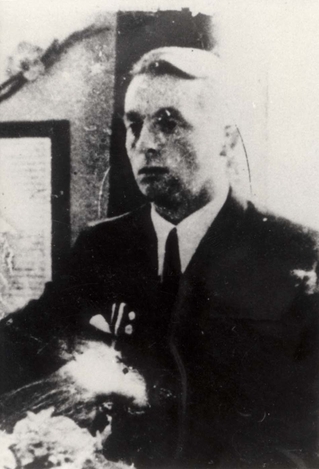
Hans Biebow, head of the Łódź Ghetto Administration
Brecht, Bertolt 1898 – 1956
German playwright whose The Threepenny Opera (1928), composed with Kurt Weill, was already playing again on the Berlin stage when Nina passed through the city in 1946. Seeing the production was one of her most vivid memories of that bombed-out, occupied city — culture resurfacing amid ruins.
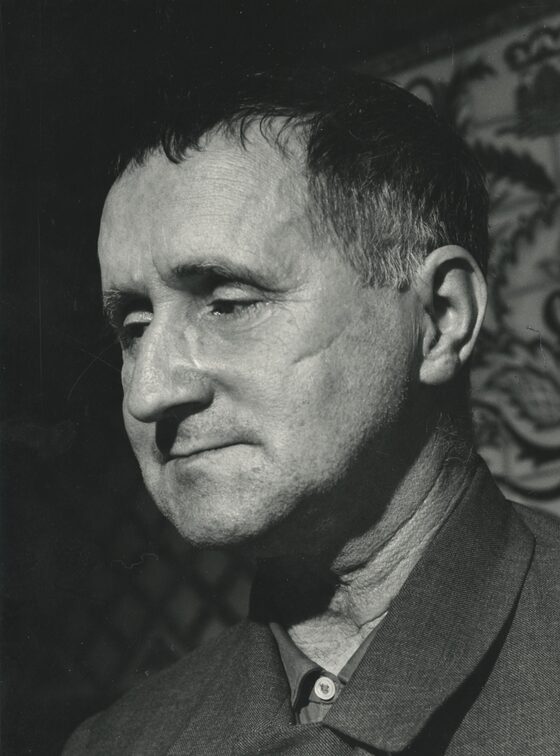
Bertolt Brecht
Bertolt Brecht
Chesnowitz, Luba
The woman who adopted Nina in the Łódź Ghetto after her parents died. Nina first saw her in the hallway of the Ressort — "a strikingly beautiful woman with flowing black hair." Luba had been searching, at Rumkowski's urging, for an orphan to take in, and through Mr. Levkovitch she found Nina. An intelligent woman, she told Nina early on: "If you were my daughter, I would beat you. But you're not, so I can't do that. Always remember: your mother wouldn't have done that." Nina and Luba survived Auschwitz and Halbstadt together. After liberation Luba stayed behind in Poland to arrange emigration to Canada, to her late husband's family.
Czarnulla, Erich
A German official who served under Hans Biebow in the Łódź Ghetto administration. Nina names him alongside Biebow as one of the Germans her adoptive father dealt with directly.
Guttman, Aba & Nechama
Nina's paternal grandparents, who died many years before she was born. Nina never knew them. Their names are all she recalls.
Guttman, Anna née Rapoport · 1892 – summer 1942
Nina's mother. Born in Kielce into a family that included rabbis. Small and thin, she wore her hair in a large bun. A graduate of a Polish school in the era before Polish independence, she read to Nina in Polish, Russian, and German, translating Gogol and Lermontov aloud from the leather-bound volumes that lined the family's shelves. She sang Nina songs from the Polish uprising of 1905, and was rarely apart from her. She died in the ghetto hospital after surgery for breast cancer. Watching the nurses care for her mother is what first drew Nina to nursing.
Guttman, Yechiel Meir 1888 – fall 1941
Nina's father. A textile merchant in Łódź, tall and thin, elegantly dressed, with glasses. A cultured man whose home was always full of guests and friends. Nina credits him with raising her "to believe in people" and to see education as a good in itself. In 1933 he returned from a business trip to Berlin with the first banana Nina ever tasted — and with a darkened account of the Reichstag fire, whose meaning she was too young to grasp. He died in the Łódź Ghetto of complications from pneumonia. Nina was thirteen.
Guttstadt, Dr.
Łódź physician whose private clinic Nina was born at on April 20, 1928. The building had a statue of a stork beneath it. As a child, Nina's parents took her on walks past the clinic and pointed out the spot.
Hadassah
The aunt of a childhood friend of Nina's, and one of the few doctors in her ghetto circle. A striking redhead — "in Poland, with a name like that… as children we really admired her." Nina reencountered her in the chaos of Auschwitz, where the SS shaved Hadassah's head in a way that left one long red strand. Given the chance to serve as a barracks doctor, she promised to return for Nina after evening roll call. She did not return — her block was transferred that day to Bergen-Belsen, where she died of typhus.
Janka
The younger sister of Nina's elementary-school friend. Janka died in the Łódź Ghetto in the final days before deportation. Her mother, reunited with Nina in Auschwitz, kept saying how fortunate little Janka had been to have died before reaching that place. Her mother, too, died at Bergen-Belsen.
Jankiel the Cymbalist
A Jewish innkeeper and cymbal player in Pan Tadeusz whose musical performance invokes Polish history and freedom. Mickiewicz portrays him as a Polish patriot — the point Nina tried, in half-Hebrew and half-Polish, to make to her Cyprus ulpan examiner when he asked about Mickiewicz's attitude toward Jews.
Komisar, Efrat
The USC Shoah Foundation interviewer who recorded Nina's testimony in Tel Aviv on October 29, 1998. Her questions structure the entire account.
Levkovitch, Mr.
Manager of the Schneider Ressort in the Łódź Ghetto. He recognized Nina's intelligence, promoted her to lead a small collar-embroidery workshop, and introduced her to Luba Chesnowitz. Nina tutored his twin daughters after work. When the ghetto was liquidated, only he survived from his immediate family — his wife and both twins perished at Auschwitz.
Levkovitch Twins
Mr. Levkovitch's young daughters, seven or eight years old. Nina had been fascinated by twins since early childhood and took it upon herself to teach the girls to read, write, and hear stories. They were hidden during the Sperre and survived that selection, but both were murdered at Auschwitz after the ghetto was liquidated.
Masevitch, Mr.
Floor supervisor at the Schneider Ressort (the tailoring factory that made German army uniforms). An older man with glasses perched on the tip of his nose. He asked Nina if she knew how to sew, discovered she did, and assigned her to button-sewing — and later, after she proved able to calculate thread lengths for an embroidered collar, referred her to the factory manager. His small kindness set in motion the chain of events that led to her adoption.
Mengele, Josef 1911 – 1979
The SS physician at Auschwitz-Birkenau responsible for selections on the arrival ramp and for cruel medical experiments on prisoners, particularly twins. Nina passed through his selection in August 1944: "A very handsome man, very aristocratic-looking, with glasses." After the war, Mengele escaped to South America and died in Brazil in 1979 without ever facing justice.
Josef Mengele in SS uniform, Auschwitz
Mickiewicz, Adam 1798 – 1855
Poland's most celebrated poet and the central figure of Polish Romanticism. His epic Pan Tadeusz (1834) — Poland's national epic — closes with a famous scene in which the Jewish innkeeper Jankiel plays the cymbal to summon the hope of Polish freedom. In Nina's Cyprus ulpan entrance exam, the examiner asked whether she knew Mickiewicz and what his attitude toward Jews had been — a question Nina answered, in halting Hebrew and Polish, by pointing to Jankiel.
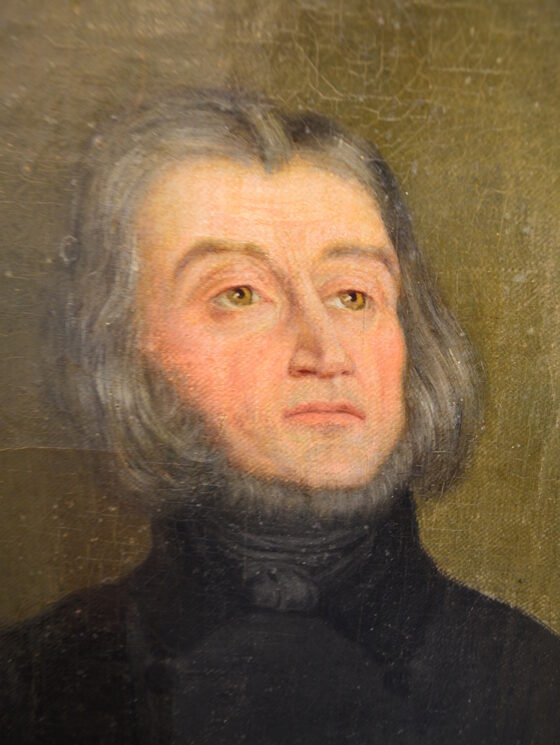
Adam Mickiewicz, Poland's national poet
Piroska
A Hungarian Kapo at Auschwitz. Nina did not know her personally. Her name ("Little Red") hints at one of the camp's calculated cruelties: the SS deliberately assigned Hungarian functionaries to supervise Polish prisoners, and Polish functionaries to supervise Hungarian prisoners, to prevent any shared language from softening the enforcement.
Reis, Yehudit
The Lagerälteste (barracks elder) who took charge of Nina's block at Auschwitz-Birkenau (Block 25, Camp B-2C). Originally from Tel Aviv, she had come to visit Krakow before the war and been trapped by the invasion. Sent to Auschwitz in 1942, she survived long enough to become a block elder. When Nina brought back a pot of soup on her first morning, Yehudit pulled her aside, studied her, and told her deputy: "You see — she'll make it through Auschwitz." The extra ladle of soup she reserved for Nina afterward was likely one of the reasons Nina lived.
Rumkowski, Chaim 1877 – 1944
The Judenälteste — "Elder of the Jews" — of the Łódź Ghetto from 1940 until its liquidation in August 1944. A former industrialist, he pursued a strategy of "salvation through labor," believing that making the ghetto indispensable to the German war effort would save its inhabitants. Historians still debate his choices. His September 1942 "Give me your children" speech, delivered on the eve of the Sperre, is among the most harrowing documents of the Holocaust. It was Rumkowski's call for ghetto families to adopt children from the orphanage that led Luba Chesnowitz to search for an orphan — and to find Nina. Rumkowski was deported on the final transport to Auschwitz and murdered there.
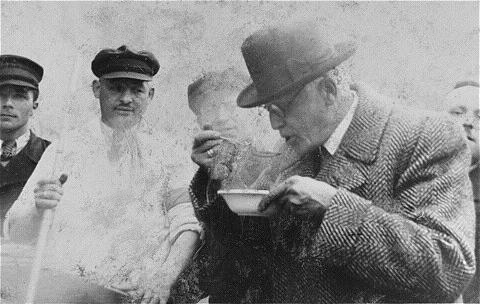
Chaim Rumkowski tasting soup in the Łódź Ghetto
Tchernichovsky, Saul 1875 – 1943
A major Hebrew poet known for his ballads, sonnets, and nature poetry. Nina's second Hebrew lesson in the Cyprus ulpan was a Tchernichovsky ballad — indecipherable to her at that stage, until the two boys from Bnei Akiva sitting on either side of her helped her write out the Hebrew letters.
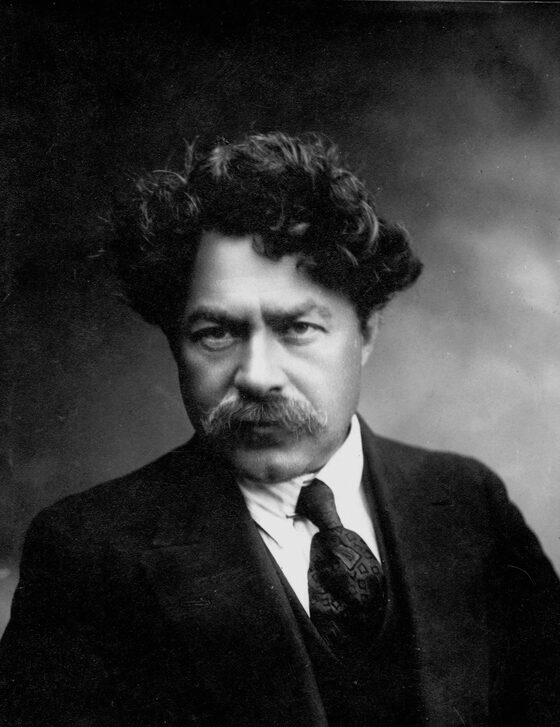
Saul Tchernichovsky, 1927
II · Places

Places she passed through.

From Południowa 58 in Łódź to Mount Scopus in Jerusalem — home addresses, ghettos, camps, resorts, and the ports and roads between them.

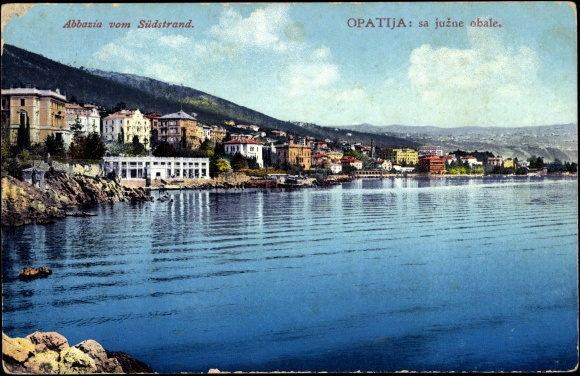
Abacja Abbazia / Opatija
A fashionable resort on the Adriatic coast in present-day Croatia, known as Abbazia in Italian and Opatija in Croatian. Nina uses the Hebrew transliteration Abacja. During the Austro-Hungarian era it was a popular destination for Central European vacationers. Anna Guttman bought Yechiel a pocket-watch medallion there when they were engaged — the single piece of jewelry Nina carried all the way to Auschwitz, where it was taken from her.
The Opatija waterfront, Adriatic coast
Aryan Side, The
In occupied Poland, "the Aryan side" referred to areas outside the Jewish ghetto, where non-Jewish Poles lived. Jews who left the ghettos had to survive by concealing their identity — learning Polish customs, Christian prayers, and living under the constant danger of neighbors who might inform. Nina's cousins in Warsaw lived on the Aryan side until they were denounced to the Gestapo.
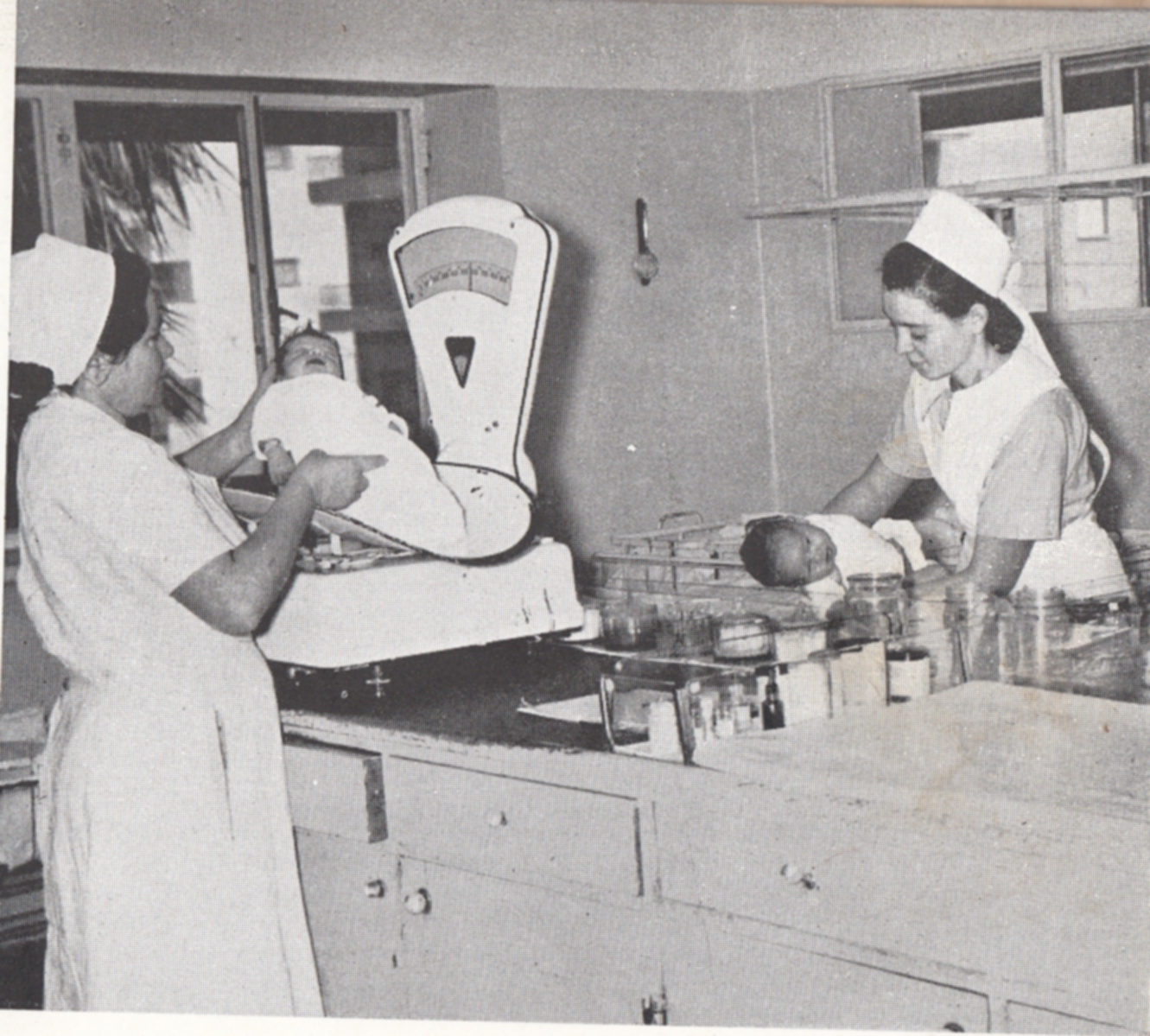
Assuta
A private hospital in Tel Aviv, founded in 1936, that operated one of the country's leading nursing schools. Nina trained at Assuta, then served there as an instructor before going to London for further study.
Maternity ward at Assuta Hospital, Tel Aviv
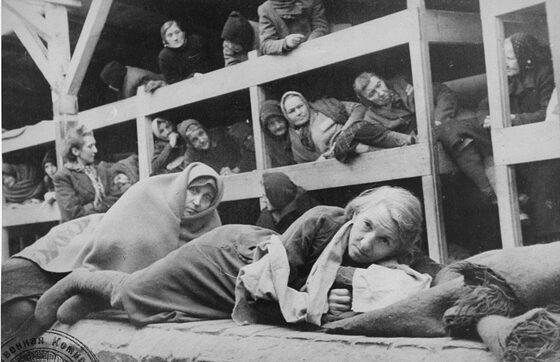
Auschwitz-Birkenau
The largest Nazi concentration and extermination camp complex, located in occupied southern Poland. Auschwitz I was the original camp; Auschwitz II–Birkenau was the extermination center with four gas chamber and crematorium complexes. Approximately 1.1 million people were murdered there, the vast majority of them Jews. Nina arrived in August 1944 with the final Łódź transport and was selected by Mengele for labor.
Women prisoners in the barracks at Auschwitz-Birkenau
Beit Alfa
A kibbutz in the Jezreel Valley founded in 1922 by Hashomer Hatzair. Nina stayed there briefly upon her arrival in Israel in July 1948 before being accepted to nursing school.
Kibbutz Beit Alfa in the Jezreel Valley
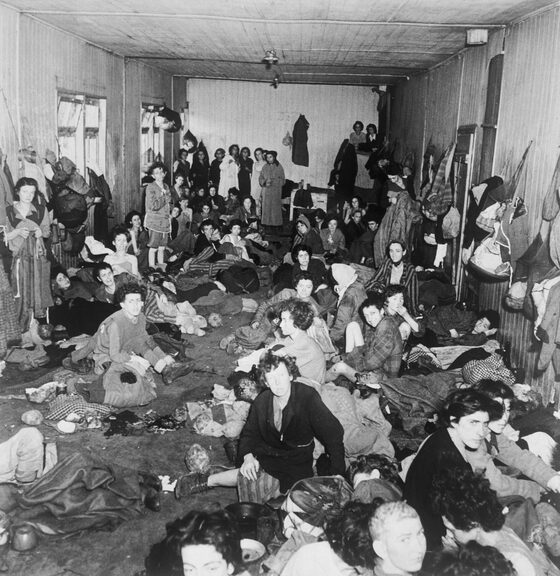
Bergen-Belsen
A Nazi concentration camp in northern Germany, initially a prisoner-of-war camp. Beginning in 1944 it became a holding site for Jews transferred from other camps, and by early 1945 it had collapsed into massive typhus epidemics, starvation, and mass death. British forces liberated it on April 15, 1945, discovering tens of thousands of unburied corpses. Hadassah, her sister, and her niece — transferred there from Auschwitz — all died of typhus at Bergen-Belsen.
The liberation of Bergen-Belsen, April 1945
Berlin
Nina knew Berlin in two moments. Her father visited in 1933 and witnessed the aftermath of the Reichstag fire — and brought home her first banana. She herself passed through Berlin in 1946 on her way out of Poland, seeing a city "completely destroyed" and Germans "in their misery," but where culture was already resurfacing; she saw The Threepenny Opera for the first time there.
Block 25, B-2C
The specific barracks in the women's section of Birkenau where Nina and Luba were first placed after the arrival selection. Ten women shared each two-tier wooden bunk, heads out, feet toward the center. Yehudit Reis was the Lagerälteste here.
Chełmno
The first Nazi killing center in occupied Poland, operating from December 1941. Victims were murdered in gas vans. The children, elderly, and sick seized from the Łódź Ghetto during the Sperre of September 1942 were sent to their deaths at Chełmno, as were the approximately 5,000 Roma held in the ghetto's Zigeunerlager.
Cyprus the "Winter Camp"
Beginning in August 1946, the British government deported Jewish survivors attempting to reach Palestine to detention camps on Cyprus. Between 1946 and 1949, roughly 52,000 Jews were held there. Nina spent fourteen months — April 1947 to July 1948 — at what the detainees called the "Winter Camp," in tin huts that were cold in winter and scorching in summer. She calls it a period she "enjoyed every moment" of: Hebrew study at the Rutenberg ulpan, Haganah instructor training, music under a single tree.
Eschwege
A German town in Hesse, in the American zone of occupation, where Nina lived at a Kibbutz BaDerech — communal life, Hebrew study, Hashomer Hatzair meetings. It was also her base for the Bricha work of smuggling survivors across the zone boundaries.
Grottaferrata
A town in the hills outside Rome where Nina's group stayed while waiting for passage to Palestine. Every house in the area was a villa. "Life there was essentially preparation for immigrating to Israel."
Haifa
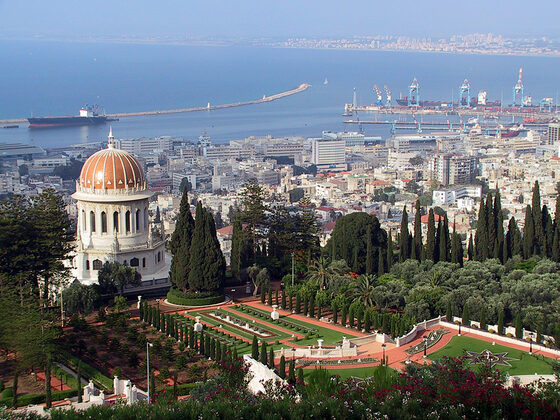
The port city in northern Israel where British destroyers brought Nina's sinking ship in April 1947. "We saw Haifa like Moses saw the Promised Land." The British then transferred the passengers to detention camps in Cyprus.
Haifa port and the Carmel coast
Halbstadt Meziměstí
A small town in the Sudetenland — today Meziměstí in the Czech Republic, near the Polish border — that held a women's labor camp attached to a weapons factory. Nina arrived in September 1944 after volunteering for the labor transport out of Auschwitz. Conditions were dramatically better: heated hall, bunks with straw mattresses and blankets, regular food, Sundays off. She worked twelve-hour shifts on machinery alongside French metalworkers and Czech foremen. Liberated May 8, 1945.
Hamburg
Home city of many of the German Jews who were deported into the Łódź Ghetto beginning in autumn 1941. Nina remembers them arriving "with leather suitcases, dressed in pre-war clothes, and within a very short time they were simply destitute and wiped out."
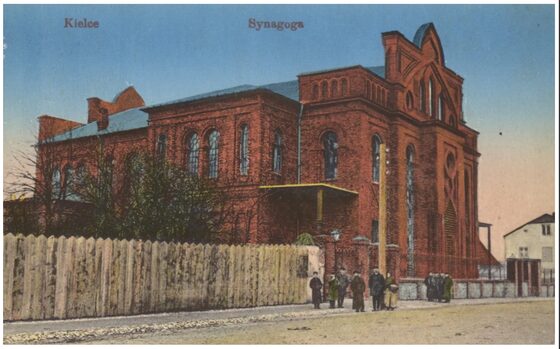
Kielce
A city in south-central Poland. Anna Guttman's family — including rabbis — came from Kielce. The name also attaches to one of the darkest postwar episodes in Polish Jewish history: the Kielce Pogrom of July 4, 1946, in which at least 42 Holocaust survivors who had returned were murdered by Polish civilians and police. Nina cites it as the event that confirmed her decision to leave Poland forever: "It was the only country that treated its remnant survivors in this way."
The great synagogue of Kielce, prewar postcard
Krakow
The city where Yehudit Reis, later Nina's Auschwitz block elder, had been visiting when the German invasion trapped her in Poland.
Łódź
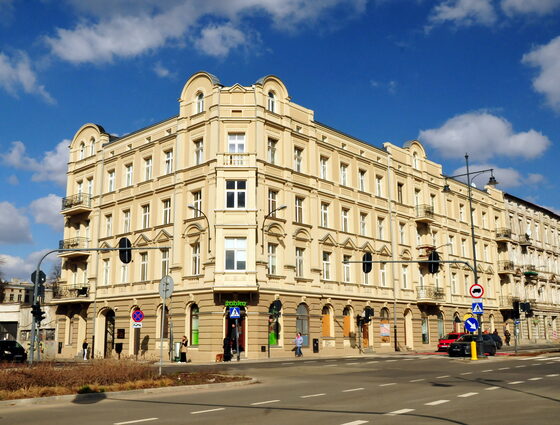
Nina's birthplace, an industrial city in central Poland. She remembered its grid-like streets, its interior courtyards, and the tall smokestacks visible from everywhere. "People used to say that in the city of 600,000 residents, every second person was Jewish." Before the war, Łódź had one of the largest Jewish populations in Europe.
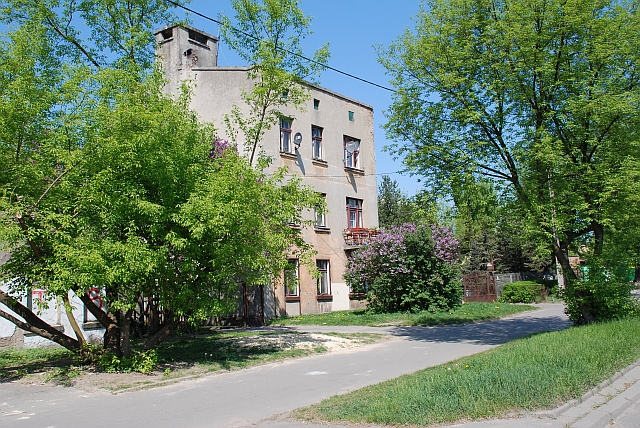
A residential building on Struga Street, Łódź
Łódź Ghetto Litzmannstadt Ghetto
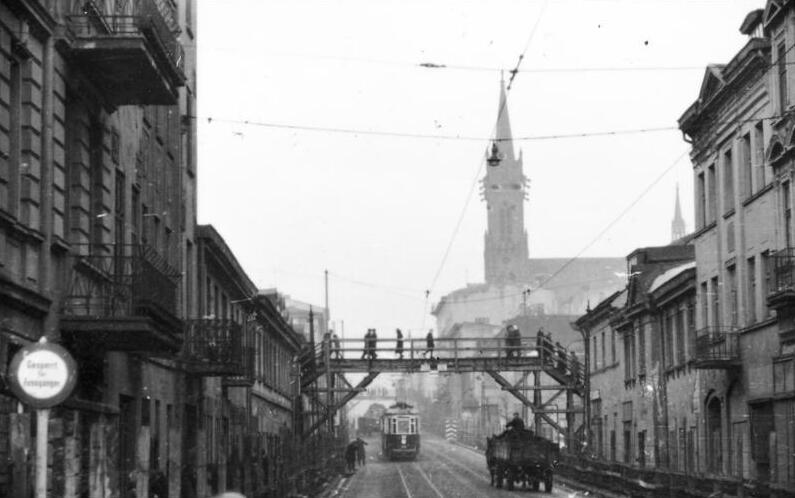
The second-largest ghetto in Nazi-occupied Europe. Established in February 1940 in the oldest, poorest section of Łódź and sealed on May 1, 1940. At its peak it held more than 160,000 Jews, crowded into old houses with no running water and outdoor toilets. The ghetto was divided in two by a fenced-off main street; a wooden footbridge crossed between its halves. Under Rumkowski's strategy of forced labor, the ghetto became the longest-lasting in occupied Europe, liquidated only in August 1944. Nina moved in with her parents at the start of winter 1940 and did not leave until the final deportation.
The wooden pedestrian bridge in the Łódź Ghetto
Marysin
A district in the northeast of the Łódź Ghetto that held the only green space — an old Jewish cemetery with large trees. The ghetto schools were gathered here until they were closed in late 1941. Nina walked thirty to forty-five minutes each way to attend class and remembers sitting on the cemetery fence during breaks: "It wasn't scary. It was a beautiful cemetery."
The Marysin district of the Łódź Ghetto
Metaponto
A small port on the Gulf of Taranto in southern Italy from which Nina's ship sailed toward Palestine in early 1947.
Mount Scopus
The Jerusalem mountain where Hadassah Hospital and Hebrew University stood, and where the Hadassah nursing school was located. Nina's family in Israel attempted to enroll her there while she was still in Cyprus, but the 1948 war intervened.
Nahariya
A coastal city in northern Israel. Nina served as head nurse at its hospital until retiring five years before recording the testimony.
Oświęcim
The Polish name for the town known in German as Auschwitz. When Nina and others in the sealed freight cars called out through cracks in the wall to Poles working the fields — "Where are we going?" — the answer that came back was Oświęcim. The name meant nothing to her. "I didn't know what Auschwitz was."
Południowa Street
"Southern Street" in Polish. Nina's family lived at number 58 before the war — a building with heavy hand-carved furniture, a portrait of her mother on the wall, and the leather-bound library of Polish, Russian, and German books that she would remember for the rest of her life.
Schlachtensee
A district in southwestern Berlin that held one of the largest Displaced Persons camps after the war. Nina worked there registering incoming refugees, drawing on her German and English. Two decades later, she would discover that the camp's director had been the cousin of one of her nursing colleagues.
Schneider Ressort
Literally "Tailor Department." The Łódź Ghetto factory where Nina was assigned work around 1942. It produced double-sided padded uniforms for the German army — white on one side for winter, khaki on the other. Most of its workers were children of tailors. Nina sewed buttons, then led a small embroidery workshop of girls her age.
Sudetenland
The predominantly German-speaking border regions of Czechoslovakia annexed by Nazi Germany in October 1938 after the Munich Agreement. Halbstadt lay within this territory.
Tel Aviv
The Israeli city where Nina built her postwar life, trained at the Assuta nursing school, and later recorded this testimony. Several of her closest school friends from Łódź also settled here.
University of Haifa
Where Nina studied sociology and anthropology part-time while raising her two children alone and working as a nurse.
Warsaw
The Polish capital. Nina's maternal grandmother lived there; she visited a few times before the war. Warsaw was home to aunts, uncles, and cousins, some of whom survived on the Aryan side — until, as Nina learned after the war, they were handed over to the Gestapo by Polish neighbors.
Warsaw Ghetto
Established in October 1940 and sealed in November 1940, it was the largest Jewish ghetto in Nazi-occupied Europe. Its destruction came in two phases: mass deportations to Treblinka in summer 1942, and the Warsaw Ghetto Uprising of April–May 1943, when remaining Jews fought back against final liquidation. A survivor of the Warsaw liquidation came to Nina's adoptive home in Łódź and described what had happened in an all-night conversation; the following day, Nina's friend refused to believe a word of it.
III · Organizations

Organizations & institutions.

The Nazi administrative machine, the Jewish councils it compelled, the underground movements that carried survivors toward Palestine — and the archive that preserves her voice.

Bnei Akiva
Hebrew: "Sons of Akiva." The largest religious-Zionist youth movement in the world, founded in 1929, combining Torah study with commitment to settlement in the Land of Israel. Two Bnei Akiva boys sat on either side of Nina in her Cyprus ulpan and helped her write her first assignments in Hebrew.
Bricha, The
Hebrew: "Flight." The organized and largely clandestine movement, active 1944 – 1948, that helped hundreds of thousands of Jewish survivors cross postwar European borders toward Palestine. Nina worked as a guide on the Bricha routes between the Soviet and British zones of Germany, leading groups of up to 200 people at night through fields.
Gestapo Geheime Staatspolizei
The secret state police of Nazi Germany, responsible for investigating and prosecuting enemies of the regime. Nina mentions the Gestapo in two contexts: Łódź Jews who collaborated with them, and the Polish neighbors who betrayed her Warsaw cousins to them.
Haganah
Hebrew: "The Defense." The Jewish paramilitary organization in British Mandate Palestine from 1920 to 1948, which became the core of the Israel Defense Forces. In Cyprus, Haganah emissaries trained Nina on the Bren and Sten guns; she quickly moved from the basic course to the instructors' course and became a first-aid instructor.
Haganah members during weapons training
Hashomer Hatzair
Hebrew: "The Young Guard." A socialist-Zionist youth movement founded in 1913, combining pioneering settlement with Marxist ideology. In postwar Germany, Nina was sent by the movement to open a chapter at a DP camp, and later the movement decided her group should continue on to Italy en route to Palestine.
Jehovah's Witnesses
A Christian denomination whose members were persecuted under the Nazi regime; approximately 10,000 were imprisoned in concentration camps for refusing military service and refusing to swear allegiance to Hitler. Identified by a purple triangle in the camps. The American family who led Nina to record her testimony were part of a Witness community that had helped Holocaust survivors in the United States.
Judenälteste
German: "Elder of the Jews." The Nazi-appointed head of the Judenrat. In Łódź, this was Chaim Rumkowski.
Judenrat
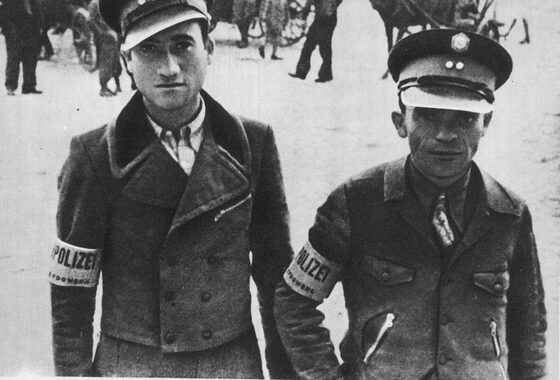
German: "Jewish Council." The administrative body Nazi occupiers required Jewish communities to establish within each ghetto. The Judenrat was compelled to implement Nazi orders — including compiling deportation lists — while trying to maintain basic services. In Łódź the council issued the public notices Nina recalls seeing on ghetto walls.
Jewish ghetto policemen, an arm of the Judenrat
Kapos
Prisoner functionaries appointed by the SS to supervise forced labor and other prisoners. The term likely derives from the Italian capo (head). Some Kapos were brutal, others protected fellow prisoners — the position forced impossible moral compromises. After the war, survivors were sometimes met with the question "Were you a Kapo?" — Nina describes hearing it from Israelis in 1948, an echo of the postwar suspicion that survival itself required guilt.
Kibbutz BaDerech
Hebrew: "Kibbutz on the Way." A communal-living arrangement organized in DP camps and staging points by Zionist emissaries to prepare young survivors for emigration to Palestine — a preparatory kibbutz, distinct from the agricultural kibbutzim established in the Land of Israel. Members lived together, studied Hebrew, and waited.
Lagerälteste
German: "Camp Elder." A prisoner appointed by the SS to administer a camp or barracks, the top rung of the prisoner hierarchy. Yehudit Reis held this role in Nina's Auschwitz block.
Rutenberg Seminar
A teacher-training institution named for Pinhas Rutenberg (1879 – 1942), a Zionist leader and founder of the Palestine Electric Corporation. The seminar sent teachers from Palestine to the Cyprus detention camps to run intensive ulpan courses. Nina took its six-week Hebrew course, studying from morning until ten at night.
SS Schutzstaffel
The Nazi paramilitary organization that ran the concentration camp system and staffed its guards. Nina encountered SS officers inside the Łódź Ghetto factory and was guarded by SS women at Halbstadt.
UNRRA
United Nations Relief and Rehabilitation Administration. An international agency established in 1943 to provide aid to countries liberated from Axis powers. In the DP camps, UNRRA supplied food, clothing, and basic services. "UNRRA would send us rags," Nina recalls of the Cyprus years, "but who cared?"
USC Shoah Foundation
The Institute for Visual History and Education, founded by filmmaker Steven Spielberg in 1994 after Schindler's List. Between 1994 and 1999, the foundation recorded nearly 52,000 video testimonies of Holocaust survivors and witnesses in 56 countries and 32 languages. Nina's testimony was recorded as part of this project in Tel Aviv on October 29, 1998.
IV · Events

Events she lived through.

The history that passed through her life, chronologically — from the Łódź Insurrection of 1905 (which her mother sang about) to the Kielce pogrom of 1946 (which confirmed there was no going home).

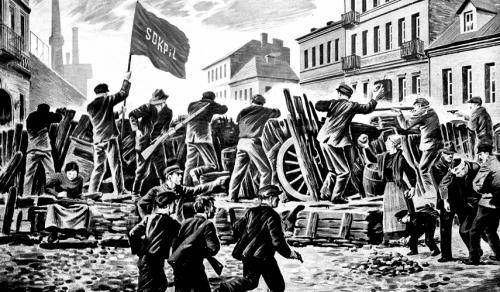
Polish Uprising of 1905
Also called the Łódź Insurrection. In June 1905, workers in Łódź — including many Jews — engaged in strikes and street fighting against Russian imperial authorities. It was part of the broader Revolution of 1905 across the Russian Empire. Anna Guttman sang Nina lullabies from this uprising; Nina only understood what they were years later.
The 1905 uprising in Łódź
Reichstag Fire Feb 27, 1933
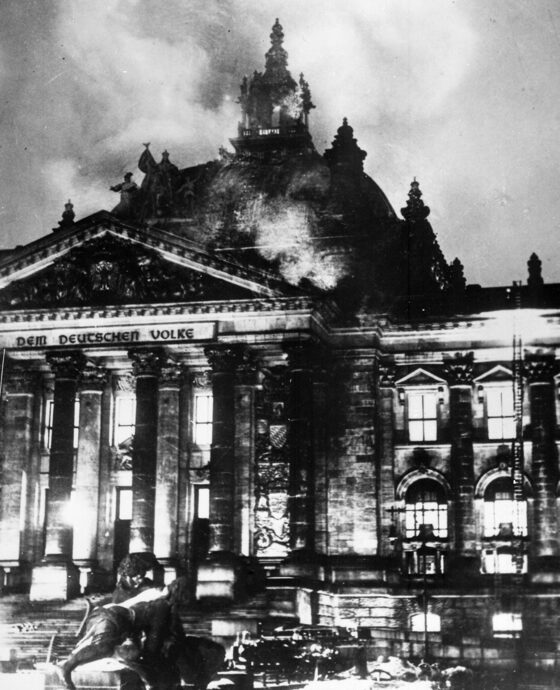
The burning of the German parliament building in Berlin, which the Nazis used as a pretext to suspend civil liberties and consolidate dictatorial power. Yechiel Guttman, visiting Berlin on business, witnessed the aftermath and brought the news home. Nina, too young to understand the word Reichstag, read the meaning in the faces of the adults around her.
The Reichstag engulfed in flames, February 27, 1933
Ribbentrop–Molotov Pact Aug 23, 1939
The non-aggression agreement between Nazi Germany and the Soviet Union, named for the two foreign ministers who signed it. A secret protocol divided Eastern Europe into German and Soviet spheres of influence, setting the stage for the invasion of Poland nine days later. Nina, vacationing with her aunt's family, saw the newspaper headlines but could not understand what she was reading — only the worried faces of the adults.
The Ribbentrop–Molotov Pact, 1939
The Sperre Sept 5 – 12, 1942
German: from Allgemeine Gehsperre, "general curfew"; also called in Polish the Wielka Szpera, "Great Curfew." The most devastating selection in the Łódź Ghetto. The entire ghetto was placed under lockdown for eight days while SS and ghetto police went house to house seizing children under ten, adults over sixty-five, and the ill — more than 15,000 people in total — who were deported to their deaths at the Chełmno killing center. Nina, who was sick at the time, was made to go outside with the rest: "Left, right — people were being crushed together." Two of her cousins were taken. Rumkowski's speech to the ghetto, "Give me your children," was delivered on the eve of these days.
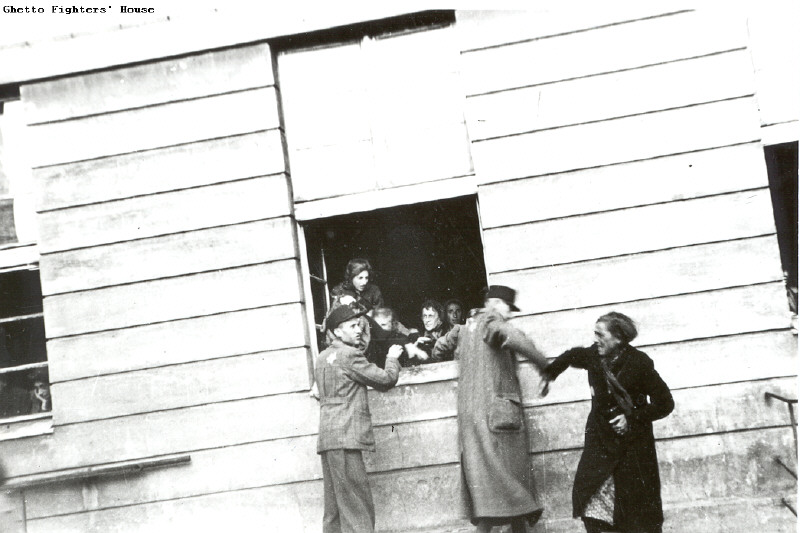
Deportation during the Gehsperre in the Łódź Ghetto, September 1942
Warsaw Ghetto Uprising April – May 1943
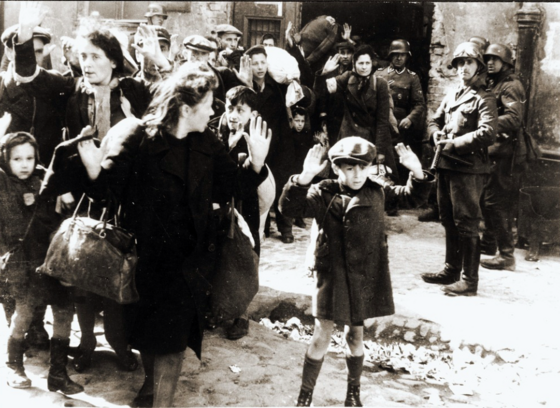
The armed revolt of the remaining Warsaw Ghetto Jews against the SS forces sent to liquidate the ghetto — the largest single act of Jewish resistance during the Holocaust. German forces burned the ghetto block by block. News reached Nina's home in Łódź through the all-night account of a Warsaw survivor.
The Warsaw Ghetto Uprising, April–May 1943
Liquidation of the Łódź Ghetto August 1944
The final deportation of the approximately 70,000 remaining inhabitants of the Łódź Ghetto, carried out over several weeks beginning in early August 1944 and concluded by the end of the month. Almost all transports went to Auschwitz. Rumkowski and his family were on one of the last. Nina, Luba, and the rest of the Chesnowitz family departed in the general wave.
Kielce Pogrom July 4, 1946
A mass attack on Jewish Holocaust survivors who had returned to the city of Kielce in central Poland. At least 42 Jews were killed and dozens wounded by Polish civilians, soldiers, and police, triggered by a blood-libel rumor that Jews had kidnapped a local Christian boy. The pogrom accelerated Jewish flight from postwar Poland. Nina, still in the country when it occurred, points to it in her final remarks: "It was the only country that treated its remnant survivors in this way."
V · Foreign Terms

Words in other tongues.

German vocabulary forced on prisoners, Polish phrases from childhood, Hebrew words of the life she built — kept in their original sound so the languages can speak for themselves.

Arbeit Macht Frei
German: "Work Sets You Free." The cynical slogan mounted above the entrance gates to Auschwitz and other Nazi concentration camps. Nina passes through a gate on her arrival but is not certain, in memory, whether she read those words there or reconstructs them from postwar photographs.
DP Camp Displaced Persons Camp
After World War II, the Allied forces established camps across occupied Germany, Austria, and Italy to house the millions of refugees — including several hundred thousand Holocaust survivors — who could not or would not return to their former homes. Nina's first postwar landing was the DP camp at Schlachtensee in Berlin.
Eine Sorge ist eine Sorge
German: "A worry is a worry." The resolution Nina's Marysin class arrived at, over half a year of German-language debate, to the question "Whose problem is bigger: the man who has no pants, or the man whose pants aren't ready yet?" A schoolroom phrase that carries a deeper claim — that the weight of a worry is measured by the one who carries it.
Ghetto Money Ghettogeld · "Rumkies"
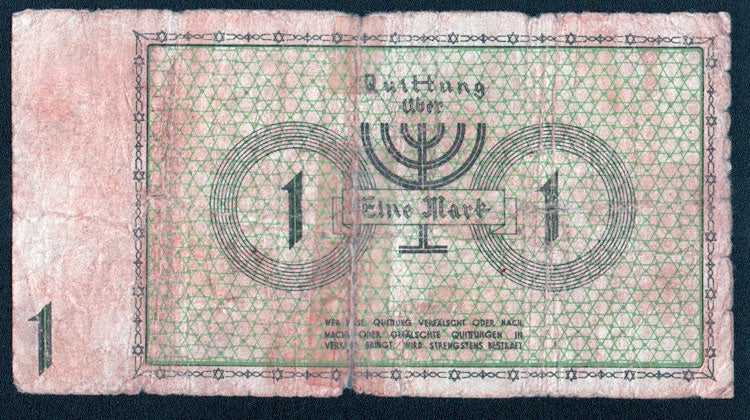
Introduced in 1940 to prevent the smuggling of valuables out of the Łódź Ghetto, the ghetto's internal currency bore Rumkowski's signature and was known colloquially as Rumkies. It came in both coins and paper notes, and it had no value beyond the ghetto walls. Workers were paid in it; ration coupons were priced in it.
Ghetto currency issued in the Łódź Ghetto
Gymnasium
A European secondary school emphasizing academic preparation for university, typically spanning ages ten to eighteen. In postwar Łódź, Nina returned briefly to a Polish Gymnasium that allowed two years of schooling in one, to catch up after the war.
Havrejuden
A derogatory term used in the Łódź Ghetto for Jews perceived to be collaborating with the German administration or holding positions of privilege. The word carries an implication of receiving better rations in exchange for cooperation — a moral accusation that survived the ghetto in memory.
Himmelfahrtskommando
German: literally "Sky-Journey Commando""Sky Commando." A grim euphemism used among prisoners for those destined for the gas chambers. On Nina's first day at Auschwitz, a barracks worker climbed onto the heating duct and announced to the newly arrived women: "This is a Himmelfahrtskommando. No one leaves here."
Juden raus!
German: "Jews out!" A widespread Nazi slogan used during the forced expulsion of Jews from their homes and during the seizures that ordered Nina's family into the Łódź Ghetto.
Mój Głosik
Polish: "My Little Voice." The title of the children's newspaper Nina's class produced — first before the war, then again in the ghetto schools in Marysin. Children wrote the content and met with the editor.
Pani
Polish: "Mrs." or "Ma'am." A respectful form of address. Nina uses it for her teachers — Pani Prechnerova, her Marysin homeroom teacher — and for other women of standing in her childhood.
Ressort
German: "Department" or "Workshop." In the Łódź Ghetto, the network of factory divisions where Jewish prisoners performed forced labor. Rumkowski's "salvation through labor" strategy depended on keeping the Ressorts productive for the German war economy. Nina worked in the Schneider Ressort, which sewed army uniforms.
RIF Reines Judenfett
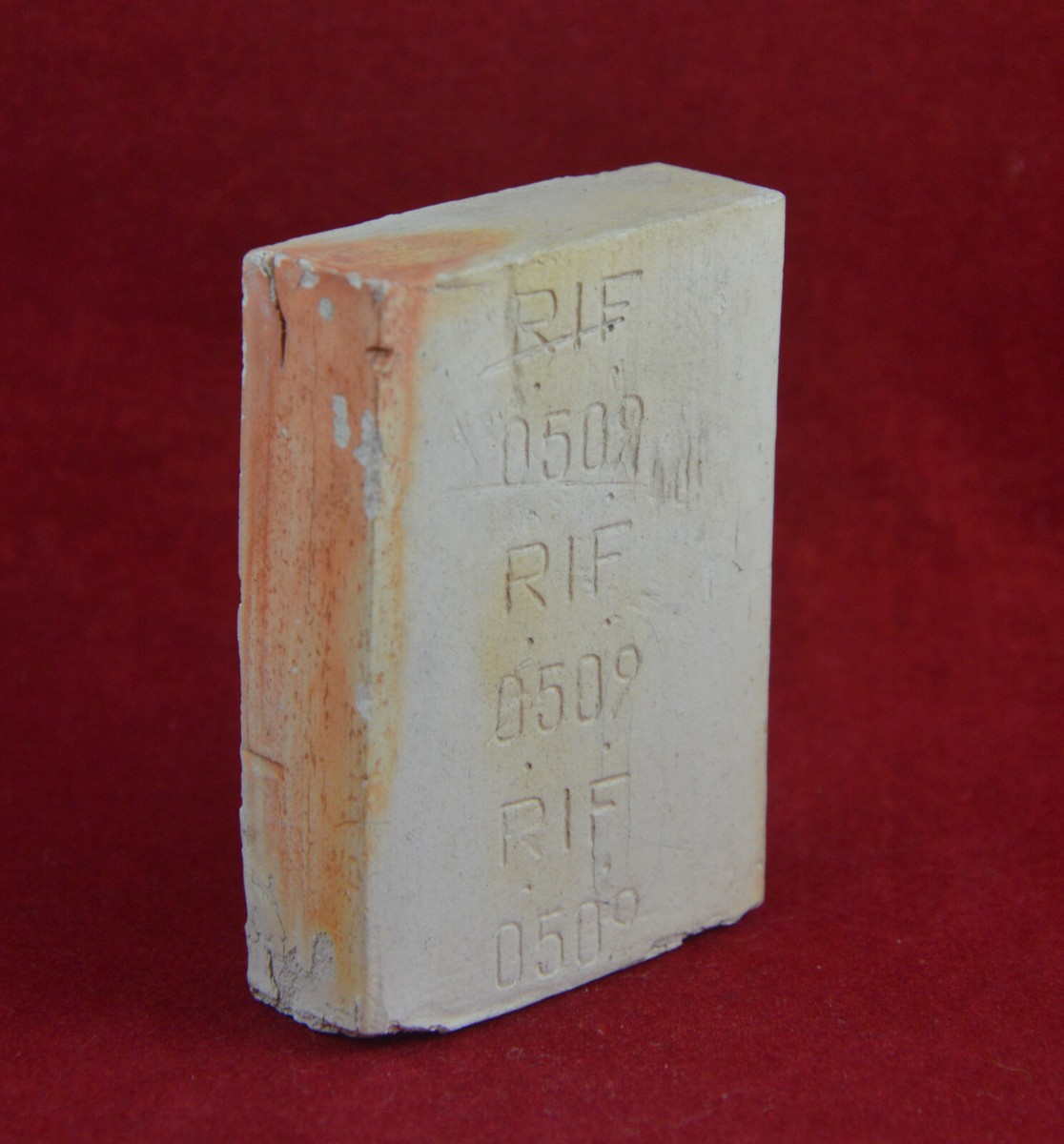
The wartime rumor — impossible to believe at the time, and still wrenching in the telling — that small bars of soap stamped RIF were made from Reines Judenfett ("Pure Jewish Fat"). In reality the letters stood for Reichsstelle für Industrielle Fettversorgung ("Reich Center for Industrial Fat Provisioning"), and no human remains were in the soap. The rumor endures in Nina's testimony as a measure of what was already imaginable: "It was hard for us to believe something like that could be true."
A bar of RIF soap
A bar of RIF soap
Sabra
Hebrew slang for a native-born Israeli, from the prickly-pear cactus that is said to be tough on the outside and sweet inside. Nina notes that many of her Sabra friends later in life "would really like to hear from me, but they don't always know how to ask."
Ulpan
Hebrew: an intensive Hebrew-language program, originally developed to teach new immigrants quickly enough to function in the country. Nina's six-week ulpan in Cyprus was run by Rutenberg Seminar teachers sent from Palestine.
Zhidkes
A derogatory Polish diminutive of Żyd ("Jew"), used as an antisemitic slur. Nina began hearing it in postwar Łódź: "Look, look — they say Hitler killed all the Zhidkes and look, look how many are still walking around here." A turning point in her decision to leave Poland.
Zigeunerlager
German: "Gypsy Camp." The segregated section of the Łódź Ghetto where approximately 5,000 Roma (Romani) were held from November 1941 to January 1942. All were murdered at Chełmno. Nina heard of the Zigeunerlager but never saw it.
A Note on Language

German terms in this glossary reflect the language of the perpetrators, which survivors were forced to learn and repeat. Many of them — bureaucratic, clinical, euphemistic — obscured the horrors they named. Preserving these words in Nina's testimony preserves both historical accuracy and the way the Nazi system dehumanized its victims through vocabulary itself. Polish and Hebrew terms, by contrast, carry the sound of Nina's childhood home and the world she chose to build after the war.

← back to the site